.png)
Diamond Consumables for Sample Preparation: A Complete Guide
- Ukam Industrial
- Apr 7
- 5 min read

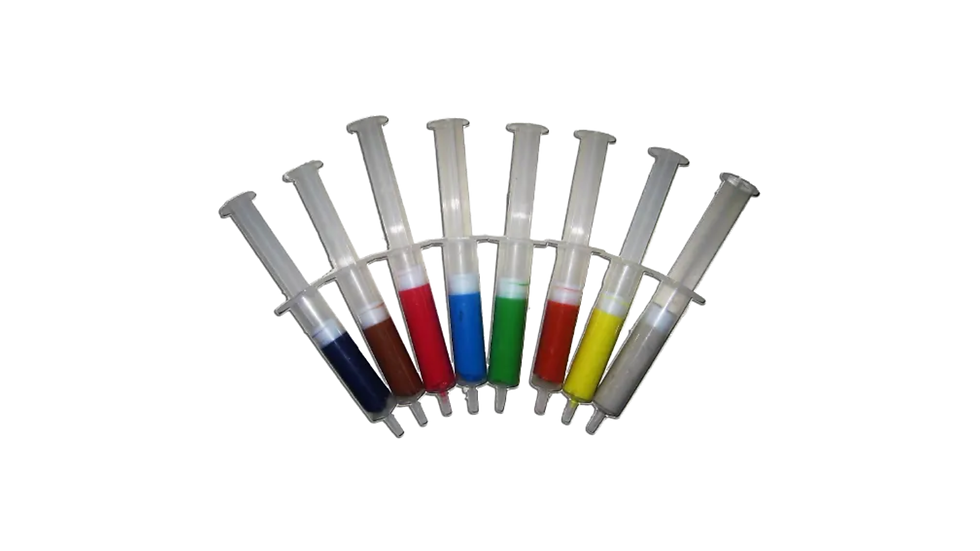
Achieving precision and accuracy in materials analysis begins with proper sample preparation, and diamond consumables for sample preparation have become the industry standard across metallography, petrography, and materials science laboratories worldwide. These specialized products leverage diamond's exceptional hardness and abrasive properties to cut, grind, and polish samples to exacting specifications required for microscopic examination and analysis. From initial sectioning to final polishing stages, diamond-based consumables deliver consistent results that traditional abrasives simply cannot match, making them indispensable tools for researchers, quality control technicians, and laboratory professionals seeking reliable, reproducible sample surfaces.
Understanding Diamond Consumables in Laboratory Settings
Diamond consumables encompass a broad range of products used throughout the sample preparation workflow. These include diamond polishing compounds, diamond suspensions, diamond grinding discs, diamond lapping films, diamond paste, and specialized cutting tools. Each product serves a specific purpose in transforming raw material specimens into mirror-finish surfaces suitable for optical microscopy, electron microscopy, and microstructural analysis.
The superiority of diamond in sample preparation stems from its unmatched hardness—rating 10 on the Mohs scale—which enables it to abrade virtually any material while maintaining its cutting efficiency. Unlike conventional abrasives that quickly dull or fracture, diamond particles retain their sharp edges throughout extended use, ensuring consistent material removal rates and surface finishes.
Types of Diamond Consumables
Diamond Polishing Compounds
Diamond polishing compounds represent one of the most versatile consumables in sample preparation laboratories. These compounds consist of precisely graded diamond particles suspended in a carrier medium—typically water-based, oil-based, or paste formulations. Available in grit sizes ranging from coarse 45-micron to ultra-fine 0.25-micron, these compounds enable progressive refinement of sample surfaces through sequential polishing stages.
Water-based diamond compounds offer easier cleanup and are environmentally preferable, while oil-based formulations provide superior lubrication for heat-sensitive materials. Paste compounds deliver concentrated diamond abrasive for aggressive material removal and are particularly effective on hard materials like ceramics and carbides.
Diamond Suspensions
Diamond suspensions provide uniform particle distribution in liquid carriers, ensuring consistent abrasive action across the polishing surface. Polycrystalline and monocrystalline diamond suspensions serve different applications—polycrystalline diamonds fragment into smaller particles during use, creating fresh cutting edges, while monocrystalline diamonds maintain their original shape for more controlled polishing.
Diamond Grinding Discs and Wheels
Rigid bonded diamond discs serve the initial grinding stages of sample preparation. These consumables feature diamond particles permanently bonded to metal, resin, or vitrified matrices. Resin-bonded discs offer cooler cutting with less pressure required, while metal-bonded discs provide extended service life for high-volume laboratory operations.
Diamond Lapping Films
Precision lapping films consist of diamond particles adhered to flexible backing materials with precise layer thickness. These films excel in producing ultra-flat surfaces required for advanced microscopy techniques and semiconductor sample preparation.
The Sample Preparation Workflow
Sectioning
Sample preparation begins with sectioning, where specimens are cut to appropriate sizes for mounting and analysis. Diamond wire saws provide precision cutting for delicate or valuable samples where minimizing material loss is critical. These saws utilize fine wire embedded with diamond particles to create thin, accurate cuts with minimal kerf width and reduced sample damage compared to conventional blades.
Diamond abrasive cutoff wheels also serve sectioning needs, particularly for routine sample preparation where speed and efficiency are prioritized. Selecting appropriate cutting speed, feed rate, and coolant ensures clean cuts without introducing artifacts like overheating, smearing, or pull-out.
Grinding
After sectioning, samples undergo coarse grinding to remove sectioning damage and achieve initial planarity. This stage typically employs fixed diamond discs with grit sizes from 120 to 600. Multiple grinding steps with progressively finer grits systematically remove subsurface deformation introduced by previous stages.
Proper grinding technique requires adequate pressure, appropriate rotation speed, and sufficient coolant to prevent overheating. Each grinding stage should remove damage from the previous step completely before advancing to finer grits.
Polishing
Polishing represents the critical final stages that produce mirror-finish surfaces for microscopic examination. This multi-step process uses diamond compounds or suspensions with decreasing particle sizes, typically progressing from 9-micron through 3-micron, 1-micron, and finishing with 0.25-micron diamond abrasive.
Polishing cloths vary in texture and composition—from relatively hard woven cloths for initial polishing to soft, nap cloths for final finishing. Matching cloth hardness to abrasive size and material type optimizes material removal while minimizing surface artifacts.
Material-Specific Considerations
Metals and Alloys
Metallic samples generally progress through standard preparation sequences using diamond consumables. Softer metals like aluminum and copper require careful attention to prevent smearing and relief, while harder alloys like stainless steel and titanium demand aggressive diamond compounds during initial polishing stages.
Ceramics and Composites
Ceramic materials' extreme hardness necessitates diamond abrasives throughout preparation. Composite materials containing multiple phases with varying hardness present challenges—diamond consumables must remove material uniformly without preferential removal of softer phases or pull-out of hard particles.
Geological Samples
Rocks and minerals span enormous hardness ranges, from soft evaporites to ultra-hard diamonds. Diamond consumables effectively prepare samples across this spectrum, though preparation parameters require adjustment based on mineral composition and texture.
Electronic Materials
Semiconductor and electronic materials demand ultra-flat, damage-free surfaces. Fine-grit diamond lapping films and colloidal diamond suspensions produce the pristine surfaces required for defect analysis and failure investigation in these applications.
Quality and Consistency Factors
Diamond Particle Quality
Premium diamond consumables utilize tightly controlled particle size distributions and high-quality diamond crystals. Particle shape, size consistency, and friability characteristics significantly impact polishing performance and final surface quality. Inferior diamond products containing irregular particles or wide size distributions produce inconsistent results and surface scratches.
Carrier Medium Formulation
The liquid or paste carrier suspending diamond particles influences performance through lubrication properties, cooling capacity, and compatibility with sample materials. Advanced formulations incorporate surfactants and dispersants that maintain uniform diamond distribution and prevent particle agglomeration during use.
Contamination Control
Cross-contamination between preparation stages introduces larger particles that scratch surfaces prepared with finer abrasives. Rigorous cleaning between steps and dedicated consumables for each grit size prevent contamination-related artifacts.
Cost-Effectiveness and Laboratory Efficiency
While diamond consumables command premium prices compared to traditional abrasives, their superior performance delivers significant value. Diamond's hardness and durability enable faster material removal rates, reducing preparation time per sample. An extended consumable life means less frequent replacement and reduced inventory management overhead.
Automated polishing systems maximize diamond consumable efficiency through precise control of pressure, speed, and abrasive delivery. These systems ensure reproducible results while minimizing operator variables that affect surface quality in manual preparation.
Storage and Handling Best Practices
Proper storage extends diamond consumable shelf life and maintains performance. Diamond suspensions and compounds should be stored in closed containers away from extreme temperatures and direct sunlight. Before use, thoroughly mix suspensions to redisperse settled diamond particles.
Diamond discs and lapping films require clean, dry storage to prevent contamination or adhesive degradation. Inspect consumables before use and discard any showing signs of damage, contamination, or deterioration.
Frequently Asked Questions
What grit size diamond compound should I start with for polishing?
Begin with a 9-micron or 6-micron diamond, depending on the finest grinding grit used; progressively decrease particle size through subsequent polishing stages.
How do I know when to replace diamond polishing cloths?
Replace cloths when polishing time significantly increases, surface quality degrades, or visible wear and embedded particles appear.
Can diamond consumables prepare soft materials effectively?
Yes, though soft materials require lighter pressure, softer polishing cloths, and careful technique to prevent deformation and artifacts.
What's the difference between polycrystalline and monocrystalline diamond suspensions?
Polycrystalline diamonds fracture during use, creating fresh cutting edges for aggressive polishing; monocrystalline diamonds maintain shape for controlled, gentler polishing.
How should diamond suspensions be applied to polishing cloths?
Apply small amounts directly to the cloth surface and distribute evenly; excessive suspension causes hydroplaning and reduces polishing efficiency.
Conclusion
Diamond consumables for sample preparation have revolutionized laboratory materials characterization by enabling efficient, reproducible preparation of samples across the hardness spectrum. Understanding the range of available products, proper selection criteria, and best-practice techniques ensures laboratories achieve optimal surface quality while maximizing consumable value and operational efficiency.


Comments